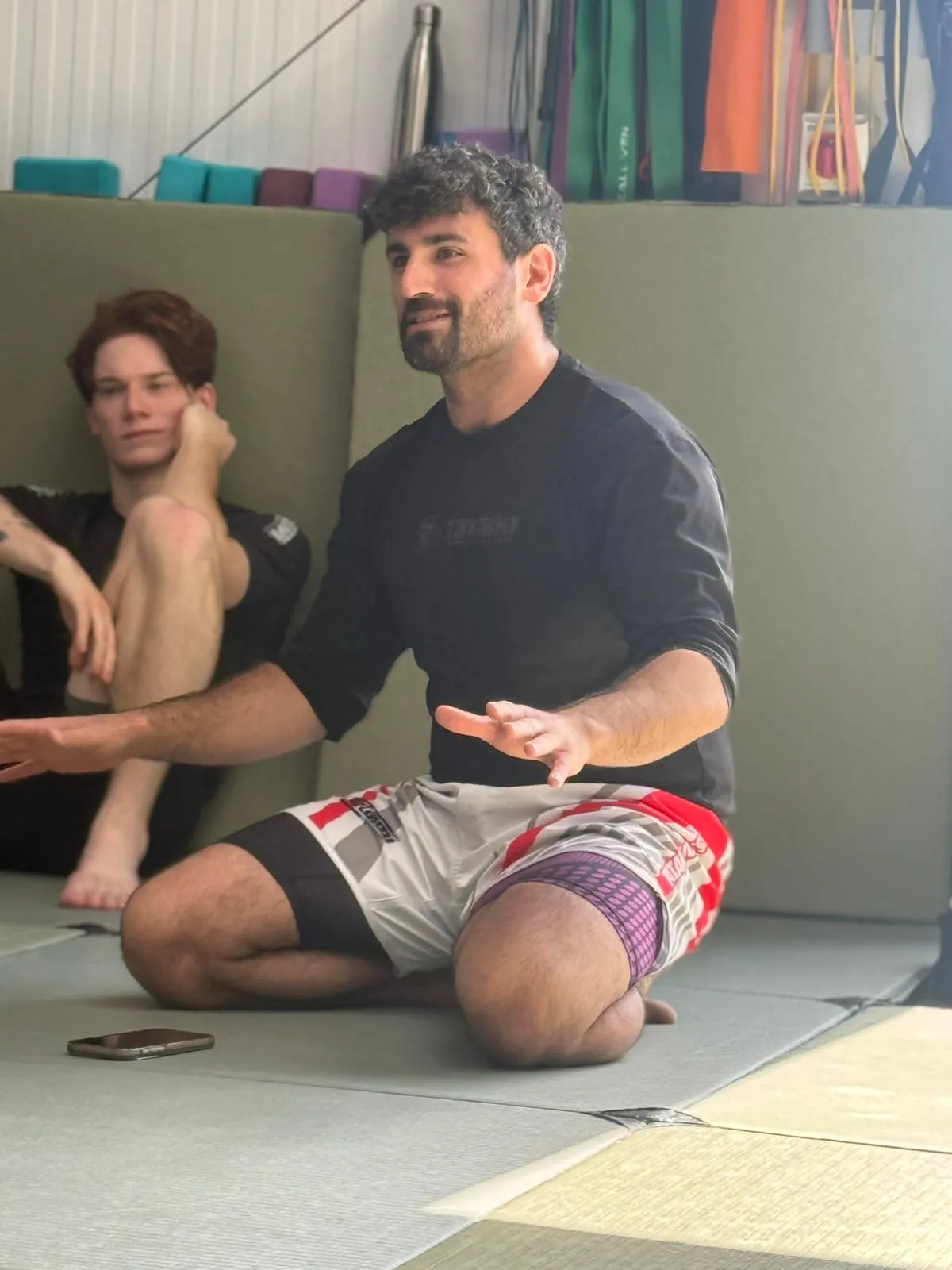
We coach it as a sport, not a martial art

People ask whether what we do is a martial art or a sport, usually expecting the answer to be a bit of a dodge. It isn’t. Grappling is historically a martial art and is currently a sport, and both descriptions are defensible. The word isn’t what I care about.
What I care about is the thing the two words imply about accountability. A sport has a scoreboard. Every claim anyone makes gets checked, constantly, by people actively trying to prove it wrong. A martial art doesn’t necessarily have that — and where the checking is absent, things can survive for decades on nothing but the fact that someone respected said them.
I came up through traditional martial arts myself, so this isn’t an outsider taking shots. It’s someone who spent years doing things a particular way and eventually asked why, and didn’t get an answer beyond because that’s how it’s done.
The scoreboard is the whole difference
Here’s the practical version. In a sport, if I teach you a way to escape side control and it doesn’t work when someone genuinely doesn’t want you to escape, we find out that night. You come back and tell me. I either explain the conditions it needs, or I stop teaching it. My status in the room doesn’t protect the technique, because the technique gets tested by people who have no interest in flattering me.
That single mechanism — live resistance, every session — is what makes the whole thing self-correcting. It’s why the sport has changed enormously in twenty years while some arts have changed almost not at all. Not because anyone was smarter, but because one system checks its own homework and the other can go a generation without having to.
A sport can’t lie to itself for very long. Someone will simply do the thing you said couldn’t be done.
What that actually changes in the room
Treating it as a sport isn’t an attitude, it’s a set of decisions:
We coach from sport science, not lineage. How the session is structured, how skills are built, how load is managed across a week — that comes from the coaching literature, the same as it would for any other sport. Who taught me is a fact about my history, not evidence for anything.
Claims have to be testable. Nothing here works “if the opponent doesn’t know what you’re doing” or only against a compliant partner. If it needs those conditions, it isn’t a technique, it’s a demonstration.
Progress is measured, not felt. You’re assessed against specific criteria — control, escapes, submissions — so you know where you stand rather than waiting for someone to tell you how you’re doing. Belts here are earned against a written syllabus: performance criteria, not time served.
You’re allowed to disagree with me. Which is only meaningful because we can settle it on the mat rather than by rank. That’s the honest reason we dropped the ceremony — deference and testing don’t sit well together.
What I’m not saying
I’m not saying martial arts are worthless, and I’m not sneering at anyone who trains one. Plenty of it is excellent, and the good clubs test their material as rigorously as any sport does. The gi is not the issue either — gi BJJ is a serious sport with a serious scoreboard, which is exactly why it runs here in its own right rather than as a costume change.
The failure mode I’m pointing at is narrower than “martial arts”: it’s untested claims protected by respect. Techniques nobody’s ever pressure-tested. Effectiveness assumed rather than demonstrated. Authority that can’t be questioned because questioning it is framed as disrespect. That can happen in a sport too, if a room lets it — it’s just much harder, because someone will eventually try the thing and it won’t work.
Respect the person. Test the claim. Those two have never been in conflict.
Why it matters to you
Because it’s the difference between spending two years learning things that work and two years learning things you’ve been told work. You won’t be able to tell which one you’re getting from the website, mine included — so come and watch a session, ask why we do something, and see whether the answer is a reason or a tradition. That’s what a combat sport looks like from the inside.
The first two weeks are free, no card and no commitment. Book a trial and come and check the claims yourself.