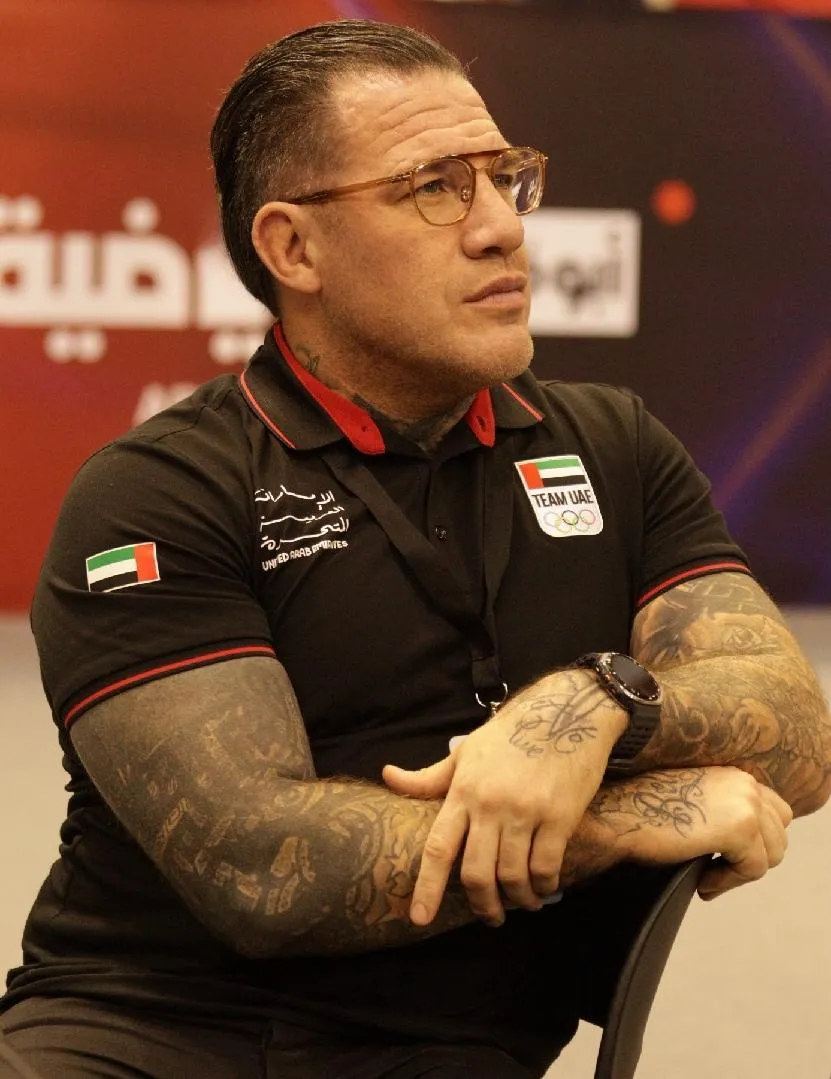
UAEMMAF Nationals — photo courtesy of Tolly Plested
My first coach
Tolly Plested opened 1st Generation in Eastbourne in 2010 and brought BJJ and submission grappling to a town that had neither. This is what I learned in his room, and why most grappling in Sussex traces back to it.

On a Sunday morning in March 2016, I emailed a gym called 1st Generation to ask about trying their MMA and no-gi class the next evening. The reply came the following afternoon — one line, sent from his phone: “Hello Ben, yes that’s fine if you attend tonight’s mma at 8. Tolly.”
I still have that email.
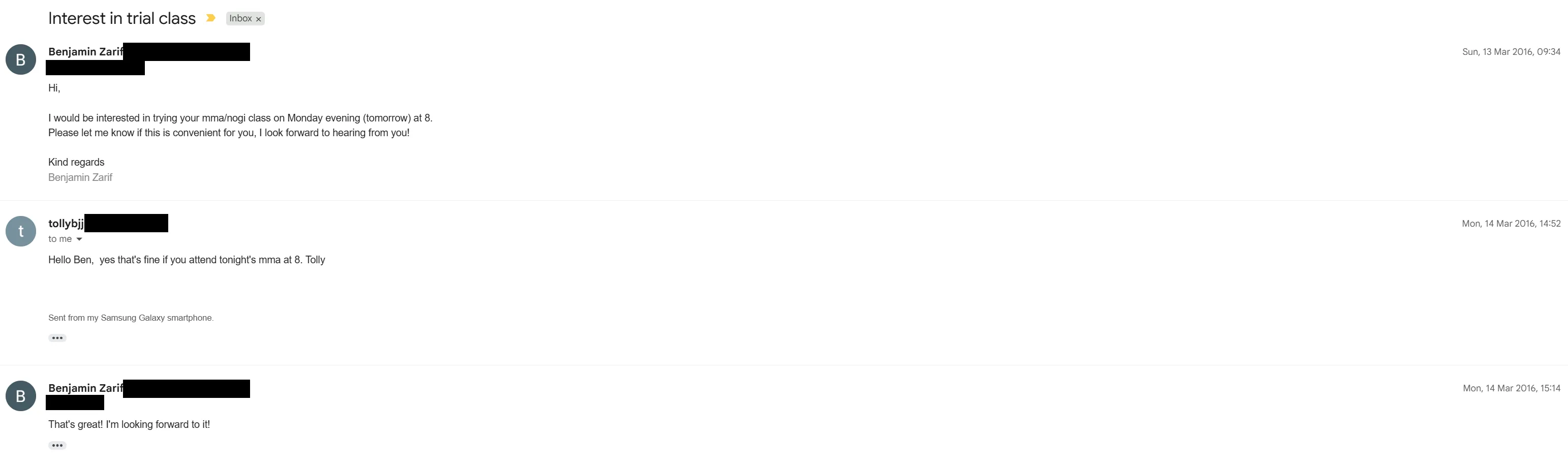
I walked in that night — Monday 14 March 2016 — at 23 years old, with 15 years of world-champion level traditional martial arts experience already behind me. Enough, I thought, to know what a coach was. I didn’t.
The class was billed as MMA/no-gi. What Tolly actually taught that night was pure grappling, without a strike thrown all evening. And I can still recite the lesson: how to roll a turtled opponent into seatbelt back control, the short choke, trapping an arm, and the classic rear naked choke. Ten years on, I could coach that session from memory, not because my memory is special but because the session made sense: one position, how to hold it, how to finish from it, how to get there.
Almost everything this club is traces back to his room, and as far as I know, nobody has ever written that down. So I’m going to.
The commute that brought grappling to Eastbourne
Tolly Plested is Eastbourne-made: he started karate in this town at seven years old. Two decades of martial arts later, he opened 1st Generation in 2010, in the middle of the UFC boom. Most people never knew what it cost to be the person teaching that class.
There was nobody of note teaching grappling in the area at the time. So Tolly travelled — one to two hours each way, every week, for years — to learn from Ze Marcello at Icon BJJ in Slough. He kept making that trip even after he’d opened his own gym: teaching Eastbourne what he knew, then driving across the country to keep learning more, all the way to a black belt under a former world champion. Grappling didn’t exist here until someone was willing to go and get it. He was the one who went.
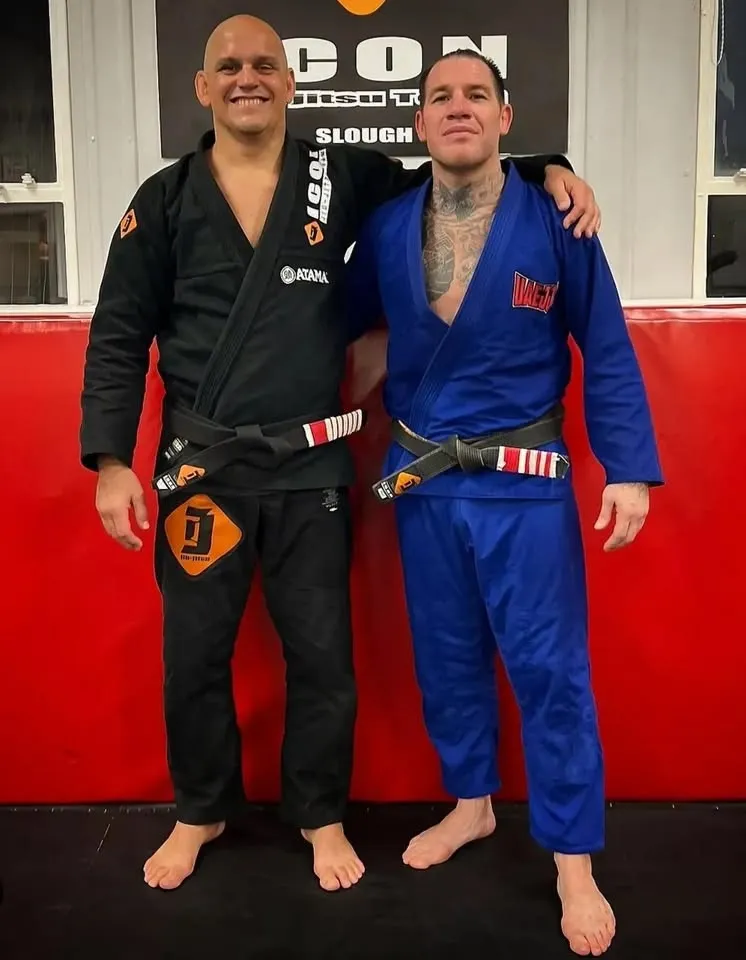 Tolly and Ze Marcello at Icon, Slough — the black belt the commute was for.
A coach, not a figurehead
Tolly was excellent at MMA: nine professional fights, nine wins, retired unbeaten. He was excellent at coaching it too.
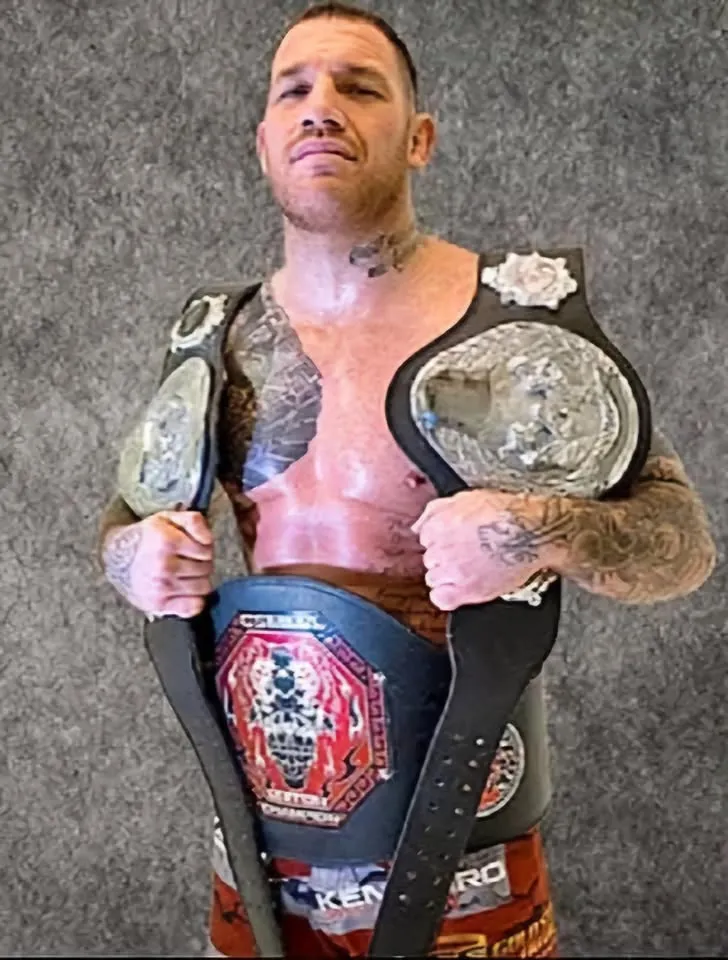 The title belts from a 9–0 career. But his passion, or at least his specialty, was always the grappling. It’s probably why my first-ever lesson was his signature choke, handed to a beginner on night one.
The way he coached was unlike anything I’d seen in years of martial arts.
He guided, advised, made constant adjustments, and nothing was ever justified by tradition. If something was taught, it was taught because it worked. That’s a combat-sports approach, years before anyone used those words. I’d love to ask him now how deliberate it all was, or whether I’ve spent years slowly learning to see what he was doing by instinct.
He was also ahead of the sport itself. He was blending wrestling into Brazilian Jiu-Jitsu at a time when that barely existed. I remember him teaching wrestle-ups from de la riva years before the famous American squads made that style of play a defining feature of the modern game.
I asked him once whether a move we were drilling was called some name I’d read, something suitably esoteric for a figure-four armlock. His answer, roughly: “It’s a very American thing, naming all the moves. All of these submissions work because…” — and then he explained the mechanics that made the whole family of them work. I didn’t have the language for it then, but he was teaching principles, not a catalogue — the way we still coach here.
When Tolly gave me my blue belt, he told me: “If you were just more consistent, you could be really good at this.” He was right, and at the time I didn’t have it in me: I’d be on the mats every day for a week, then disappear for two. It took me years to answer that sentence properly, and when I finally did, I took it to an extreme even he wouldn’t have suggested. But that story is for another day.
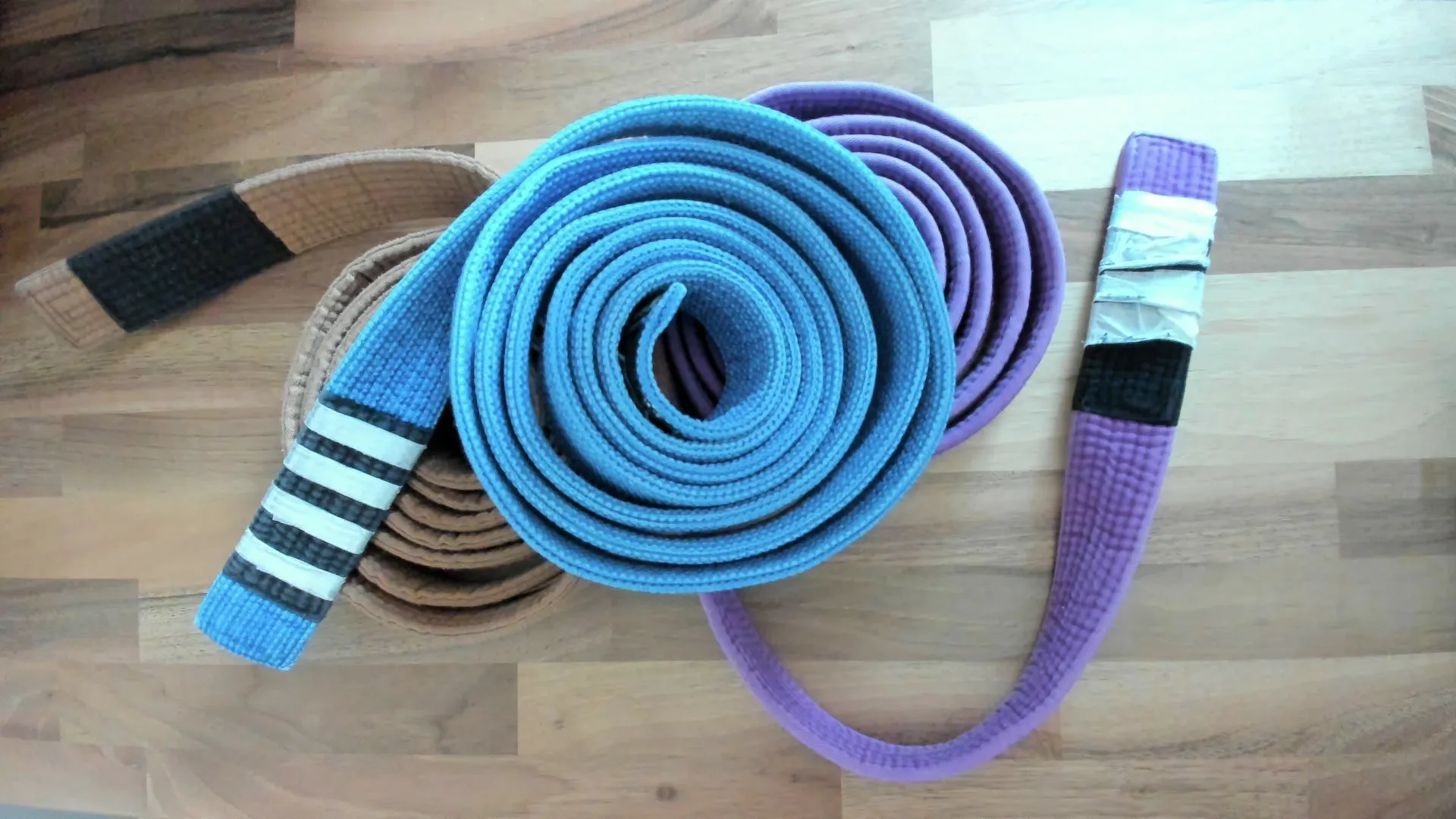 The blue belt Tolly gave me, front and centre. The rest followed it.
A different sport
Coaches from outside his lineage used to come and train alongside us at 1G. Many times I watched his blue and purple belts calmly pick apart visiting black belts, and at the time it looked like magic.
I’ve since understood what I was actually watching. It’s what happens when someone spends their whole training life treating submission grappling as a sport, under a coach who agrees that’s what it is. The visitors had often trained just as long. They’d just been practising something else. It isn’t comparable, and watching that gap up close is probably a big part of why this club is built the way it is.
You could hear the same gap at competitions. Other coaches shouted slogans from the barrier: take the back, take the back. Tolly’s cornering, as I remember it, sounded more like: hold that position, don’t get greedy — he wants the underhook, so keep your arms tight — hips heavy, let’s complete the pass.
I still have my 1G gi patches. The gi they were stitched to was trained into the ground years ago, but before it went, I sat and unpicked them, because the cloth was done and what they represent wasn’t.
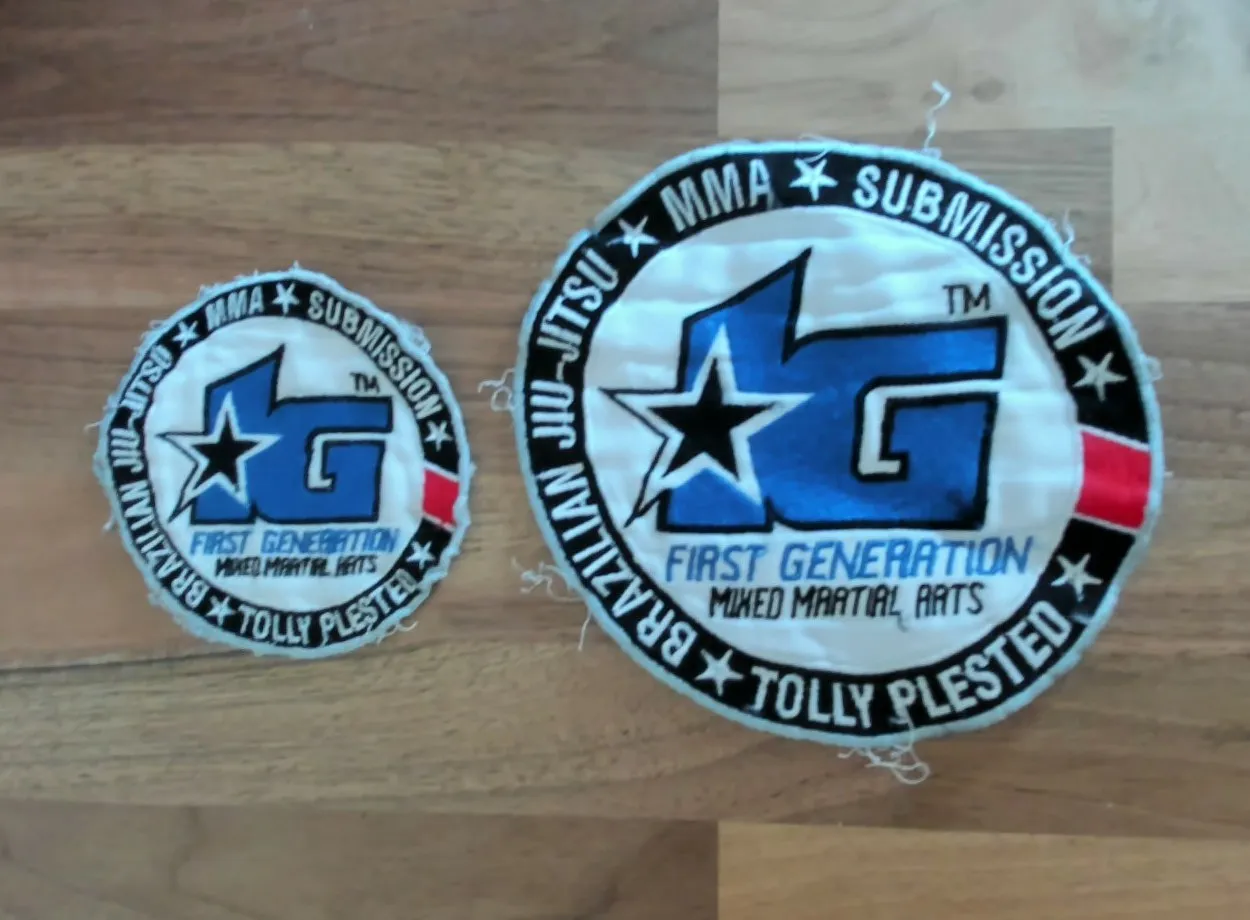
Around the ring, they list what the gym taught: Brazilian Jiu-Jitsu ★ MMA ★ Submission. That last word, stitched there as a discipline in its own right, years before “submission grappling” became the normal name for the sport we all now play. He was winning at it, too: in 2014 he lost a European final in the gi in Lisbon, went home, trained harder, and came back at the IBJJF European No-Gi Championships in Rome that same year, where he beat the man who’d beaten him and won the open-weight division outright. Two years before I walked through his door, my first coach was a European no-gi champion.
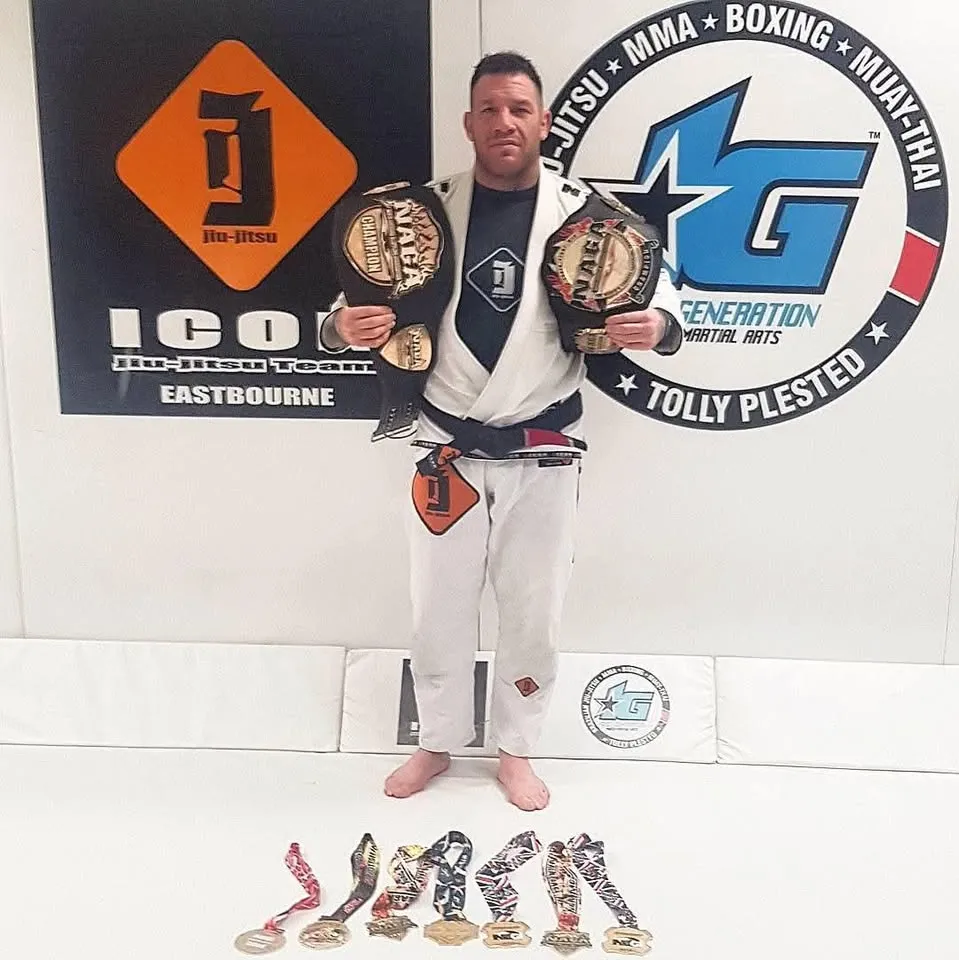 Tolly at 1G with NAGA title belts and a row of medals. The logo behind him is the one on my patches.
From Eastbourne to Abu Dhabi
Tolly’s talent didn’t stay local. In 2019, UFC Gym brought him to Nottingham to head up their BJJ and MMA: the move that took him out of Eastbourne, and eventually wound down 1st Generation, scattering its people across the county. From there it was Abu Dhabi: Head Coach and Director of MMA at UFC Gym UAE, head MMA judge for the UAE Warriors promotion, and since 2023, National Team Head Coach for the UAE MMA Federation, where he’s still doing the work today. Under him, the UAE squad took four golds at the IMMAF Youth World Championships, among them the first Emirati female world champions in the sport’s history. Asked about it in the press, he put the success down to teamwork. Fifteen years on: still a coach, not a figurehead.
The Sussex grappling lineage
All but one of the grappling schools in Eastbourne today, mine included, descend directly from his lineage, and the tree runs well beyond this town into the rest of Sussex. Maybe somebody somewhere can dispute who was technically first. Nobody can dispute whose influence mattered most. Almost everyone coaching grappling around here learned it, directly or at most once removed, from Tolly Plested.
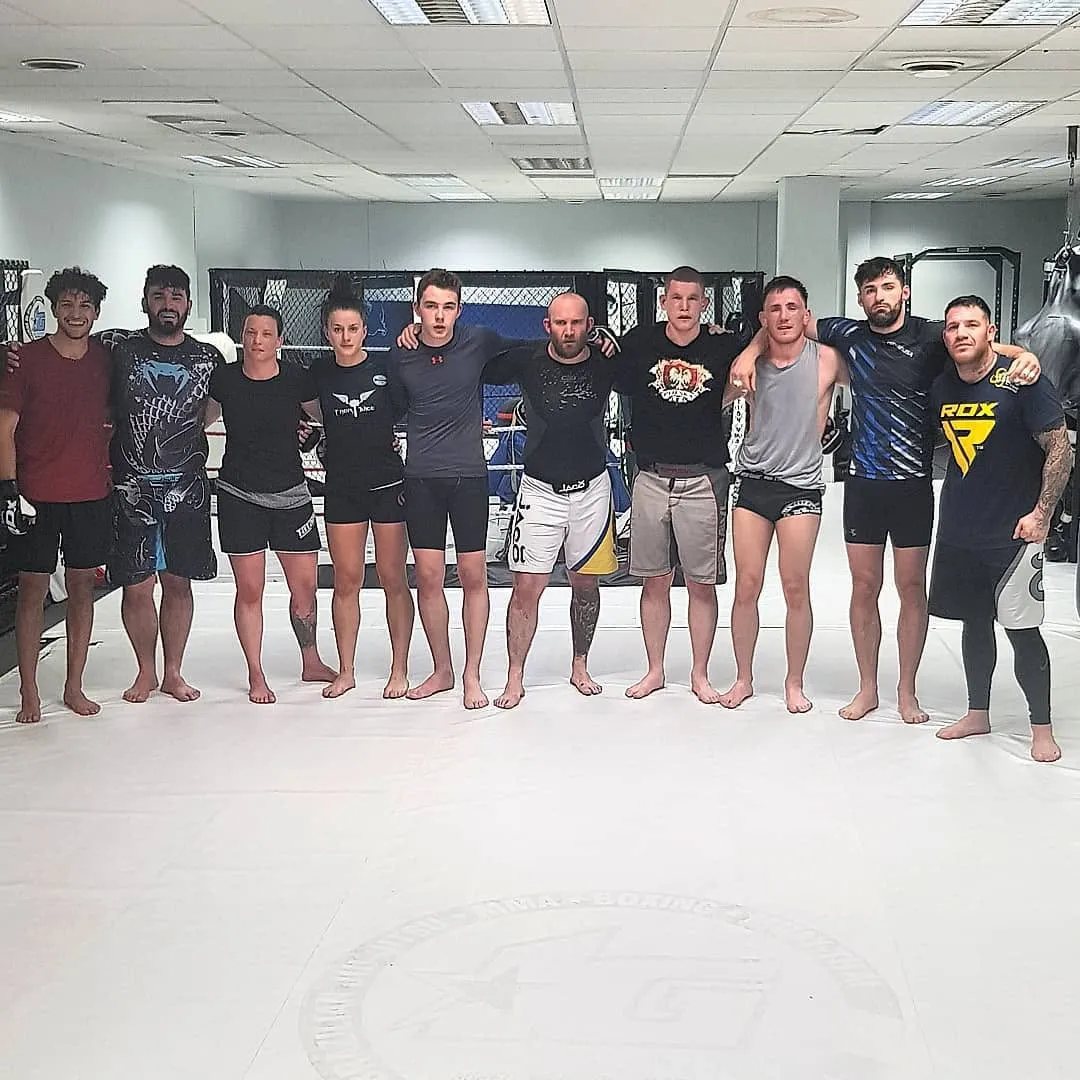 1st Generation, Leslie Street, 2018 — that’s me second in from the left, 30 kilos heavier than I am today. Tolly far right. Several people in this photo went on to open their own gyms.
And through all of it — the results, the gym full of people he’d built from nothing — he never demanded a bow. Nobody was made to call him master, though by any honest measure of the word he was one. We called him Tolly. Sometimes Coach.
If that sounds familiar, it should. It’s the catalyst for the kind of room we’re building today.
Thank you, Tolly.