Strength and conditioning for grapplers

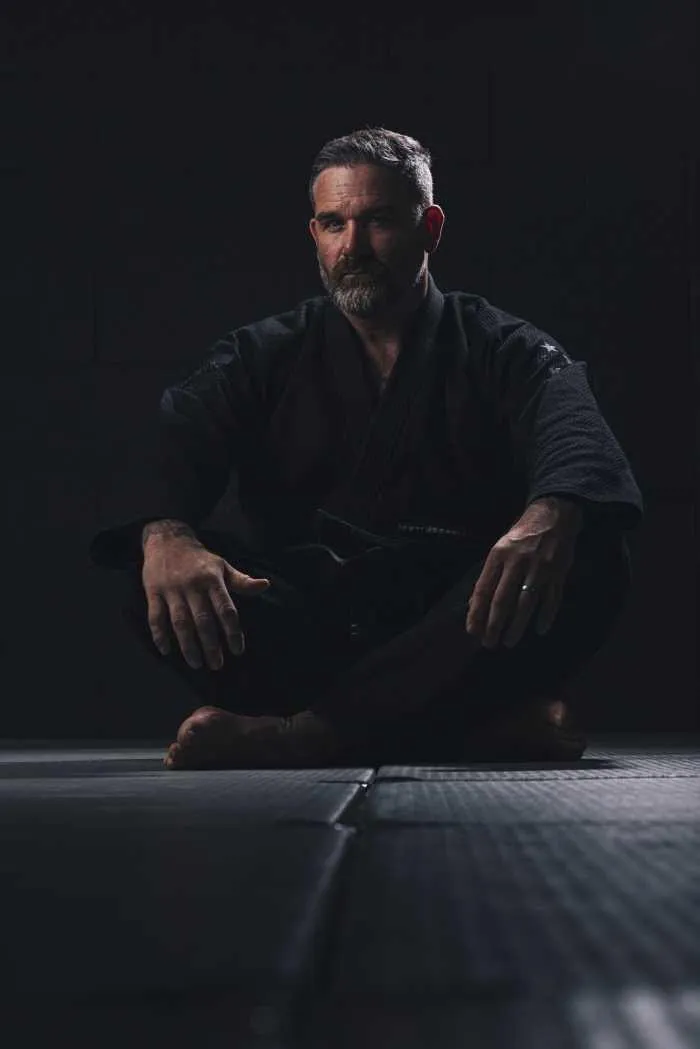
I’ve spent most of my life in gyms — boxing, powerlifting, and coaching other people through both. I own Rebel Rebel, the gym the club trains out of, and I run the gi classes here. So I get asked about lifting more than anything else, usually in the same shape: what should I be doing in the gym to get better at grappling?
The honest answer is less than you think, and not what you’d expect.
What strength work is actually for
It is not there to make you win rounds. You win rounds by being better at grappling, and the only way to get better at grappling is to grapple. If you’re training twice a week and thinking about adding three gym sessions, you’ve got it backwards — add a third mat session first.
What the weight room does is keep you available. A stronger neck, stronger hips, stronger grip and a back that can hold position are the difference between a bad scramble that gives you a sore week and a bad scramble that gives you eight weeks off. Tissue that can tolerate load is tissue that doesn’t tear when someone lands on it awkwardly. That’s the whole pitch: strength buys you training time, and training time is the thing that actually makes you good.
Lifting doesn’t win you rounds. It keeps you on the mat, and the mat is what makes you good.
Lift boring things, and lift them properly
Most “grappling-specific” exercises are nonsense — someone doing a squat while twisting on a wobble board because it vaguely resembles a sweep. It resembles nothing. It’s just a worse squat.
Your body doesn’t know what sport you play. It knows load, position and repetition. So the list is short and dull: a squat pattern, a hinge — deadlift or hip thrust — a push, a pull, and something that makes you carry weight while staying rigid. Add direct neck work, because grapplers need it and almost nobody does it. Add grip if your grip fails before your arms do.
Two sessions a week of that, forty minutes each, will do more for you than five sessions of anything clever. Go slowly. Add a little weight when the last set felt easy, and not before.
Conditioning comes from rolling
People turn up asking me to build them a conditioning programme, and nine times out of ten what they’ve actually got is a breathing problem and a tension problem, not a fitness problem. Watch a new grappler gas in ninety seconds — that’s not their heart. That’s them squeezing every muscle they own and holding their breath while they do it.
Live rounds are the conditioning. Six-minute rounds against a resisting person are as hard a piece of conditioning as I could design, and they have the advantage of also teaching you to grapple. If you want extra on top, keep it easy and aerobic — a bike, a walk, something that lets you recover — not more high-intensity work stacked on a body that’s already taking a beating on the mat.
The unglamorous part
Sleep and food do more for your recovery than any programme I could write, and they’re the two things people ignore because they’re not interesting. If you train hard three times a week, eat enough protein, get your sleep, and lift twice — that’s it. That’s the whole programme. Anything else you add is decoration.
If you’re tired all the time, the answer is almost never a better lifting programme. It’s more sleep and more food.
How this works here
The club trains out of my gym, so the weights are already in the same building as the mats. Members who want their strength work programmed rather than guessed at have that available — come and talk to me, and I’ll build something around what you’re already doing on the mat instead of on top of it. If you want the mat side first, that’s how we train, and it’s the right place to start.
And if you’re carrying an old injury, tell me. Working around other people’s shoulders and backs is most of what coaching strength actually is. There’s almost always a version of the lift that works.
The first two weeks are free. Book a trial, get on the mat, and we’ll sort the gym side out once you’re training.