What "get genuinely good" actually means

“Get genuinely good at grappling.” It’s the first line on our front page, so I should be straight about what I mean by it — because it’s a claim, not a slogan, and I’d want it held to.
What “good” isn’t
Good is not a belt colour. I’ve written already about why a belt can be handed out and taken away for reasons that have nothing to do with your ability — so the colour round someone’s waist was never a reliable measure of much.
Good is also not a collection of flashy techniques you’ve seen on a video and hit once, in the air, against nobody. And it’s certainly not being able to catch a nervous beginner on their first night. Anyone can do that. It tells you nothing.
What “good” actually is
Being genuinely good is both simpler and harder than any of that. It’s being able to express the fundamentals against someone who is properly trying to stop you — in both directions. You can escape the bad positions and impose your own game. You’re not only dangerous when everything goes your way, and you’re not just hanging on underneath a bigger, fresher opponent — you can get out, and get back to attacking.
That two-way quality is the whole thing. A good grappler has offence and escape, standing to the finish. Take one of those away and you’ve got someone who looks handy on a good day and falls apart on a bad one.
Good isn’t a stack of techniques or a colour round your waist. It’s whether the fundamentals hold up when someone is genuinely trying to stop you.
How we measure it
We assess you against clear, specific criteria — positional control, escapes, submissions, the things that actually make you hard to deal with — so you always have an honest picture of where you stand, checked against real standards rather than someone’s mood. Rank follows the same logic: it’s earned against a written belt syllabus, which members can ask to see.
We’ve gone as far as writing the whole standard down. It’s called the fundamental canon: every principle a competent grappler expresses, why it works, and what a diligent student can expect. It exists so you can hold our coaching to it — not the other way round.
How long it honestly takes
Here’s the part most gyms won’t put a number on. For an ordinary, motivated adult training three times a week, genuine two-way competence takes roughly two years — around four hundred honest hours on the mat. Not a weekend course, and not a decade of gatekeeping either.
The hours are the real currency; the calendar just follows them. Train more often and it arrives sooner. Train once a week and it takes far longer. There’s no shortcut that skips the reps, and no secret that makes them unnecessary — which is exactly why anyone selling one is selling you something.
Roughly two years of honest three-a-week work. Not a weekend, not a lifetime — a real, countable amount of work.
How you actually get there
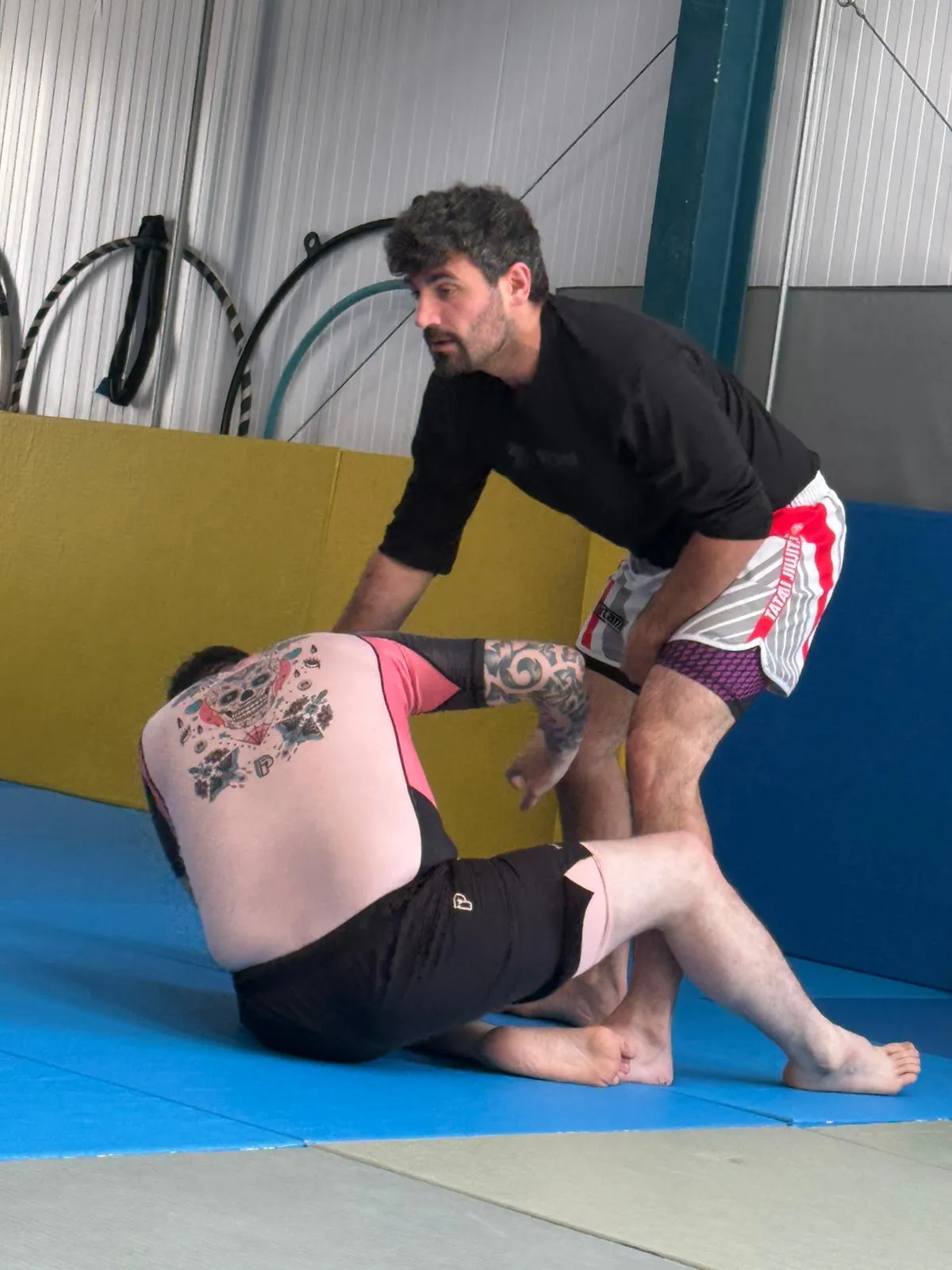
You get good by solving real problems against real resistance, over and over — not by memorising moves in the air. That’s why we train the way we do: constraints-led games, most of the hour spent live at a sensible intensity, and beginners starting in the hard spots on purpose, because that’s where you’d otherwise drown.
You practise the exact thing you’re trying to get good at, under the only conditions that count. Fewer things, more reps each, all of it live. That’s genuinely faster than collecting techniques you can’t use when someone’s fighting back — and it’s the difference between looking like you train and actually being able to grapple.
The honest version
“Genuinely” is doing real work in that sentence. It rules out the shortcuts, and it rules out the mysticism. What’s left is plain: train the fundamentals against resistance, keep turning up, and in about two years you’ll be a grappler who can genuinely handle themselves. That’s a floor to build your own game on — not a ceiling, and not a promise anyone but you can keep.
The first two weeks are free, no card and no commitment. Book a trial and start putting the hours where they count.