"I've been there" is not a coaching methodology
A good grappling coach is measured by who they develop, not by what they won. Competitive achievement and coaching ability are different crafts, and evidence for one is not evidence for the other.

There’s a pitch you’ll hear in every combat sports club in the country: train with me, because I’ve been where you want to go.
It sounds convincing. It is also one of the weakest arguments for coaching quality.
Competitive achievement tells you something important: this person became very good at their sport. What it does not tell you, by itself, is whether they can make you very good at it. Those are different claims, requiring different evidence.
The best coaches are routinely not the best athletes
John Danaher never competed at a meaningful level. He built Gordon Ryan, the most dominant grappler of his generation, alongside an entire group of elite athletes. Cus D’Amato was never a fighter of note. He developed Floyd Patterson and Mike Tyson. José Mourinho barely played professional football. Butch Harmon coached Tiger Woods at his absolute peak off the back of an unremarkable playing career.
These aren’t exceptions we need to explain away. They expose the mistake in the premise. If you had to reach a particular level yourself before you could develop someone else to that level, coaches like these shouldn’t exist.
But they do. Because elite performance and elite coaching are different crafts that happen to operate in the same environment.
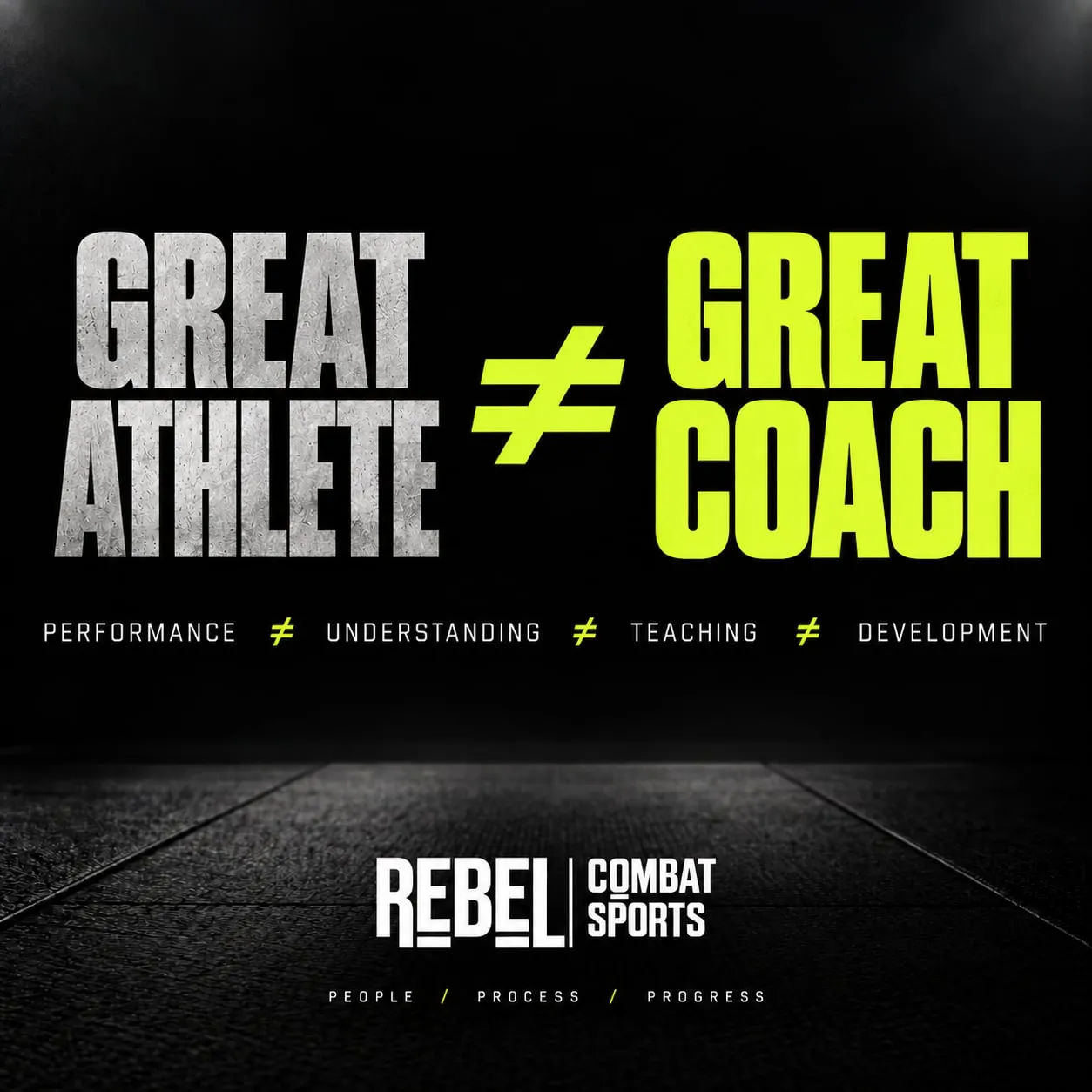
Being able to do something is not the same as understanding it.
Understanding it is not the same as being able to teach it.
And teaching it is not the same as being able to reliably develop it in someone else.
Those things overlap. They are not interchangeable.
Why medals don’t automatically transfer
Elite athletes succeed partly because of things they cannot give you. Exceptional physical attributes. A body that recovers unusually well. Fifteen thousand hours of practice accumulated during a childhood you didn’t have. An obsessive temperament capable of solving problems through sheer repetition. And, in some cases, access to and willingness to use performance-enhancing drugs.
Some of the very things that made them exceptional can also make it harder for them to understand why an ordinary student is struggling. High-level skill is often heavily automated — the athlete no longer consciously processes every part of what they’re doing because they don’t need to. That creates a familiar problem in expertise: the expert blind spot. Experts can underestimate how difficult something is for a novice, skip over steps that have become automatic, or explain what they think they do rather than what actually happens in performance.
None of that means great athletes cannot become great coaches. Many do, and competitive experience can be enormously valuable. But the medal isn’t the part doing the coaching.
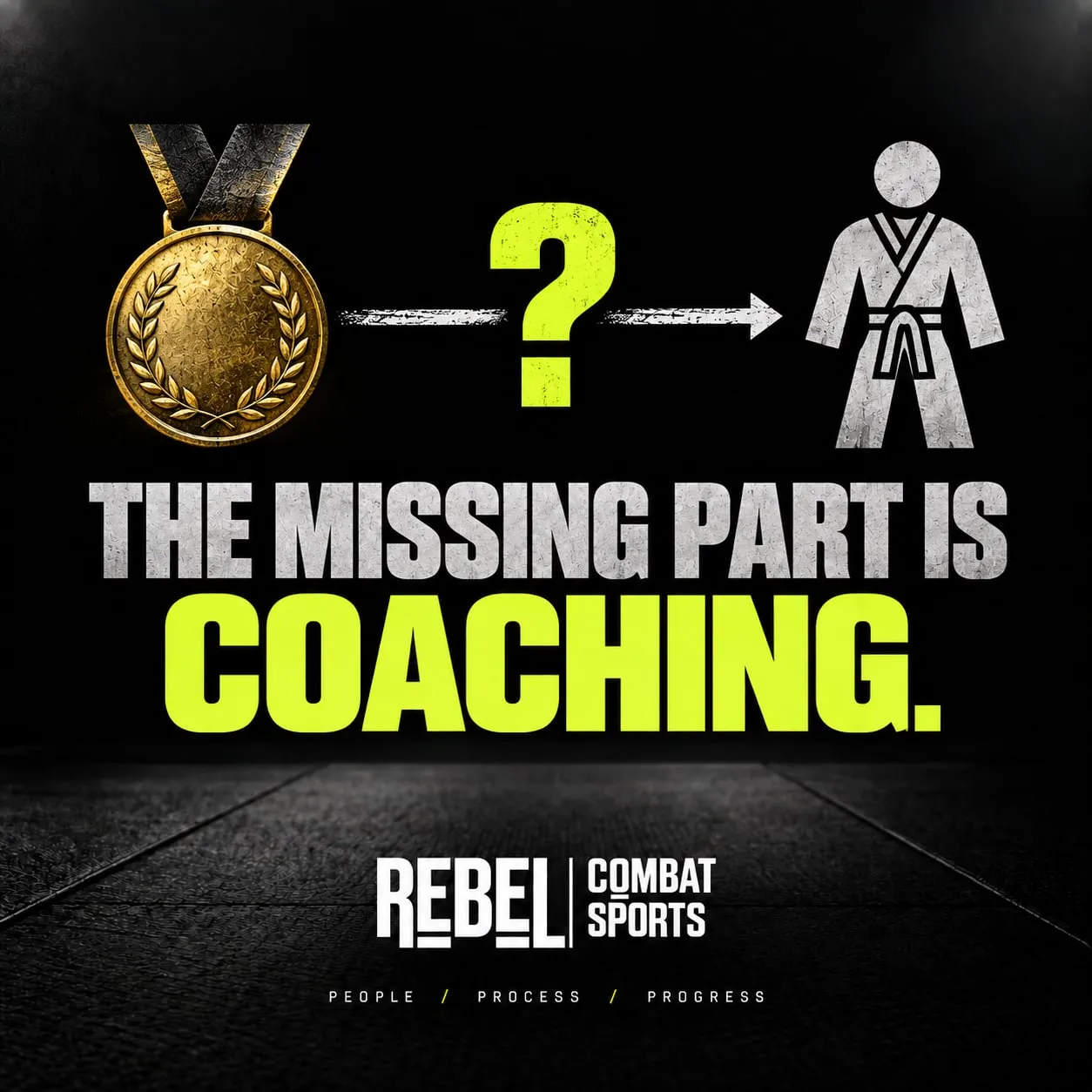
A medal is evidence that the athlete found a route that worked for them. Coaching is the ability to find a route that works for someone else.
So when someone’s entire offer is “I’ve been there”, what they’re selling you is evidence of their own journey. That journey might be extraordinary.
It still isn’t a method for developing yours.
What coaching actually is
Coaching is diagnosis — seeing precisely why your pass is failing, which is rarely the same reason a champion’s pass would fail.
Coaching is task design — building practices where the right movement solutions emerge under realistic pressure, rather than rehearsing choreography against a compliant partner and hoping it survives contact.
Coaching is progression — knowing what to teach, what to leave alone, when to add resistance, when a struggling athlete needs the problem simplified and when they need it made harder.
Coaching is adaptation — different bodies, different attributes, different learning histories and different goals require different routes through the same problem.
Coaching is environment — building a room where a nervous beginner and a serious competitor can both improve on the same mat, on the same night.
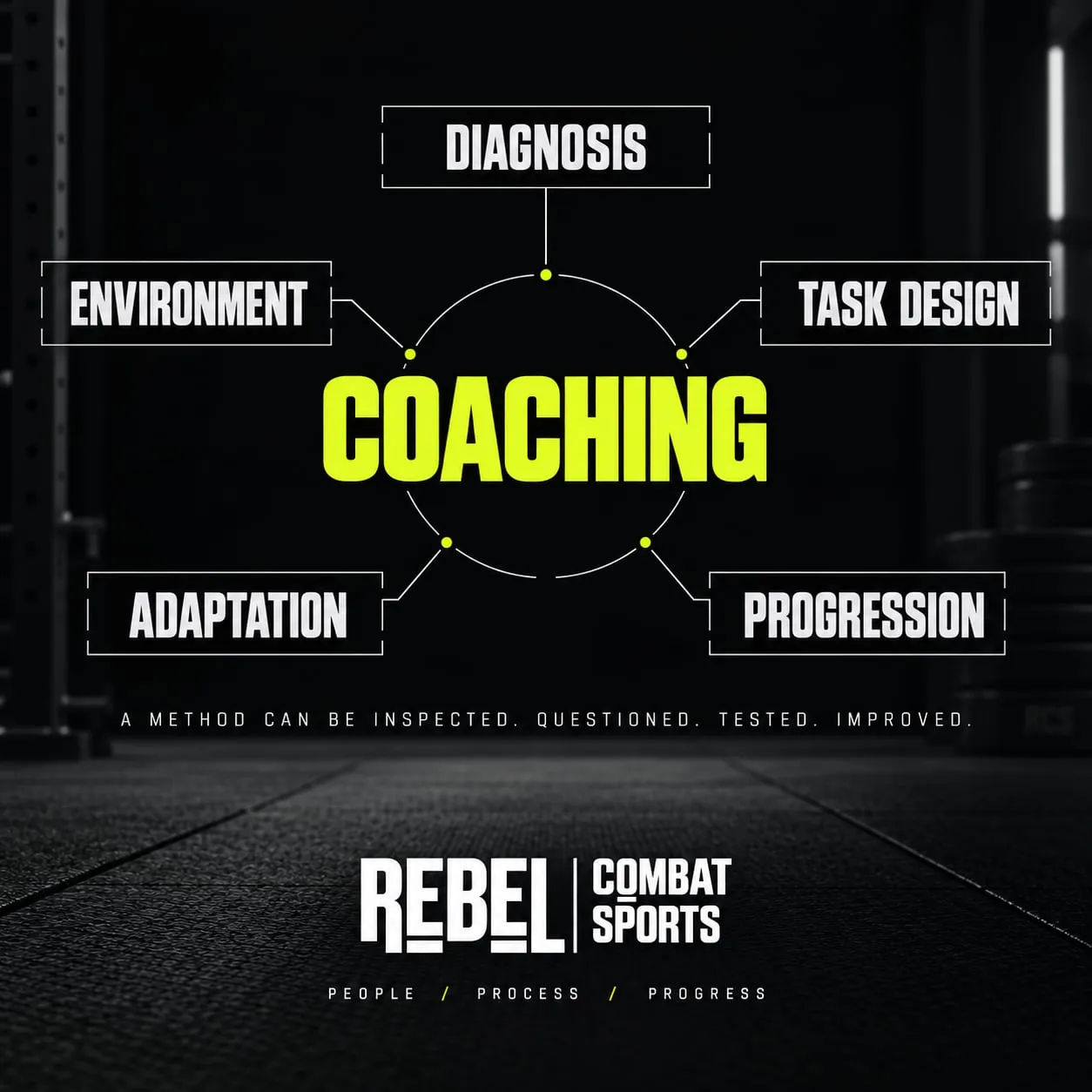
None of that follows automatically from a medal. It follows from a methodology. And a methodology, unlike a war story, can be inspected. It can be questioned. It can be tested. It can fail. It can improve.
That’s why ours is written down. It’s why we’ll publish it.
If your coaching method cannot survive daylight, the medals may be doing more of the selling than the methodology.
The part where I undermine my own credibility, twice
Here’s the thing. I have been there. Not in grappling — in my striking days, I was a two-time world champion.
I’ve since had the unusual experience of coaching from both positions: in a sport where I had the competitive résumé, and in one where I didn’t. And I know the résumé isn’t what makes someone a coach.
Nothing about standing on that podium taught me how to develop someone who wasn’t me.
Different body.
Different attributes.
Different starting point.
Different life.
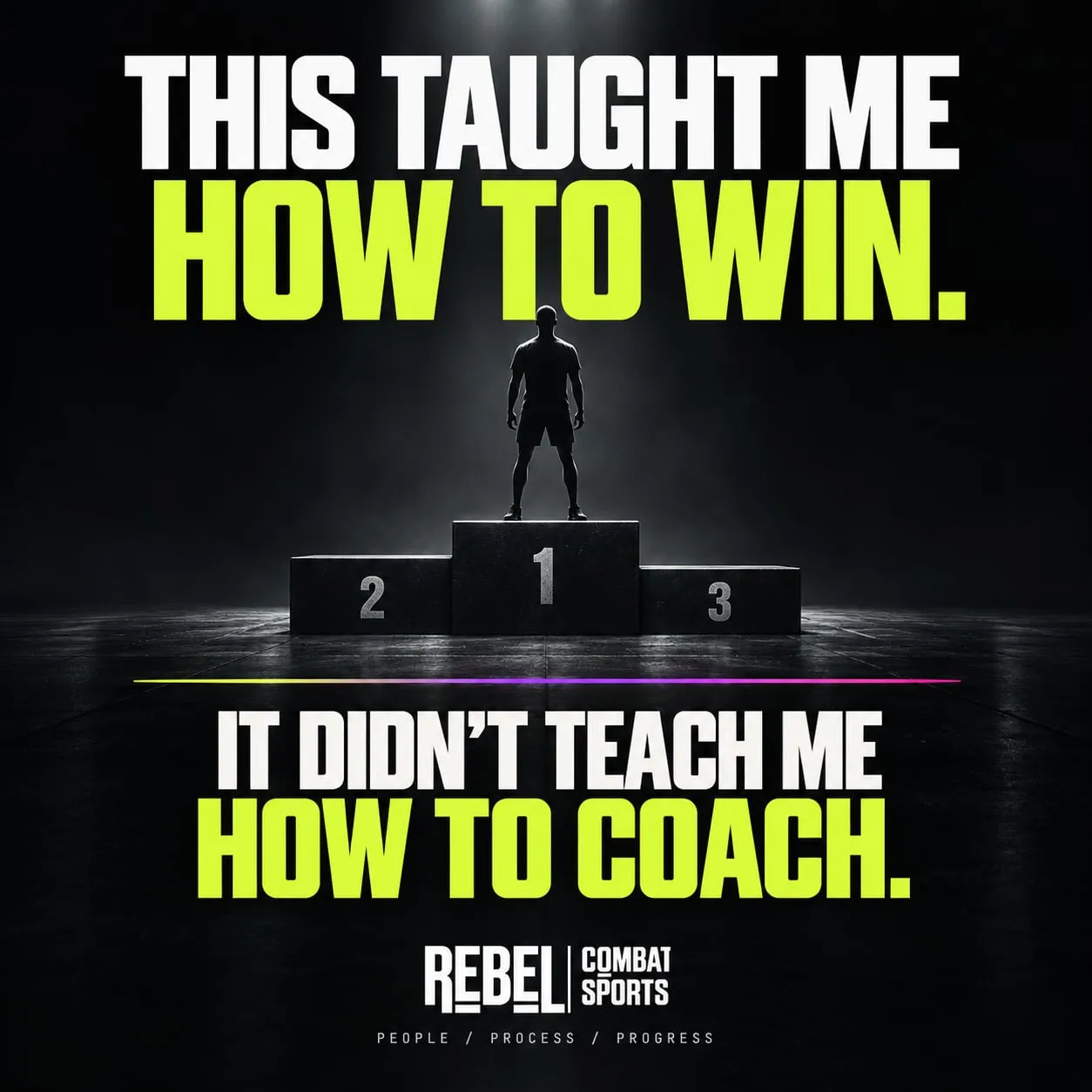
What made me useful to other athletes came afterwards, and it came slowly. Twenty-plus years of studying how skill develops. Borrowing heavily from skill acquisition research. Testing ideas on real people. Keeping what transferred. Throwing out what only worked because I was the one doing it.
And here’s the second problem. My former striking students have reached world champion level. Not one of them got there because I once did. They got there because the method held up when they pushed on it.
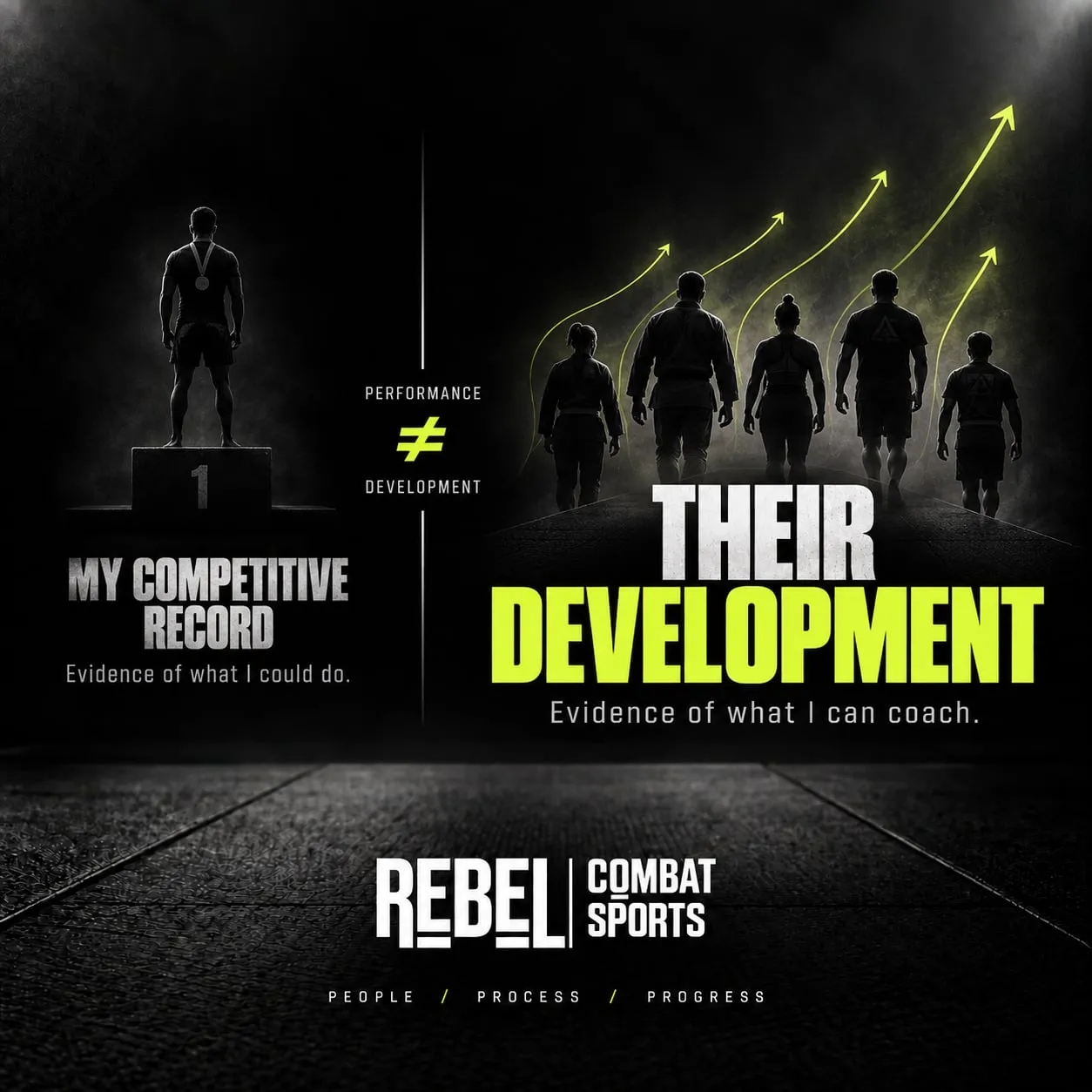
My competitive record is evidence of what I could do. Their development is evidence of what I can coach.
That distinction matters.
What to ask instead
If you’re choosing where to train, for yourself or your kid, “what did you win?” is not a useless question. It just isn’t the most important one. Ask:
“What’s your methodology?” A good coach should be able to explain what they’re trying to develop, why they’re using a particular method and what would cause them to change it.
“How do you know a student is actually improving?” Vibes and stripe ceremonies don’t count. Look for observable progression.
“Show me someone you developed.” Not just the genetically gifted competitor who arrived already dangerous. Show me the nervous beginner. The unathletic adult. The kid who took longer than everyone else. The person who started ordinary and became difficult to deal with.
That’s development.
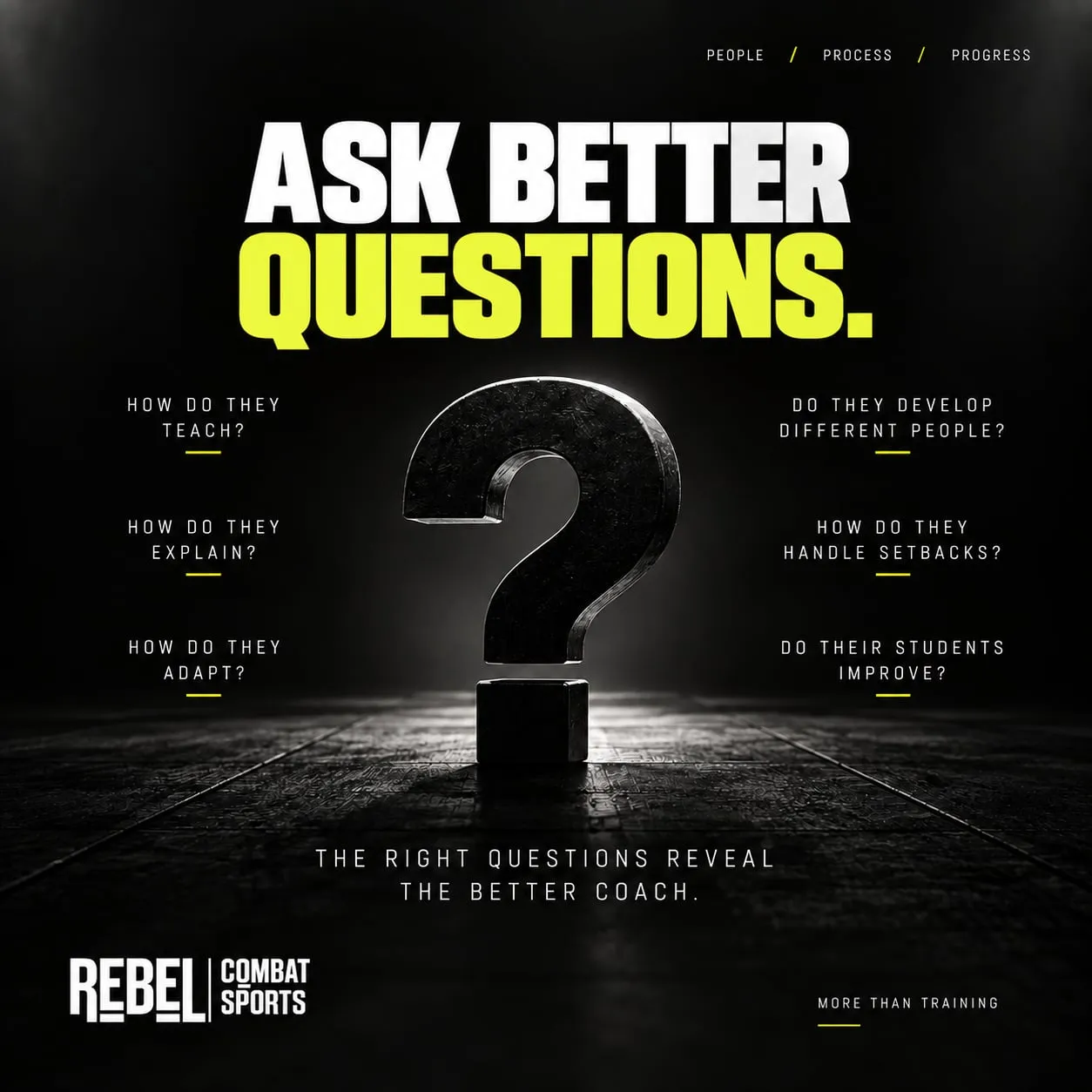
The question isn’t whether your coach has been where you want to go. The question is whether they understand how to get you there. Competitive achievement is useful evidence. It is not a coaching methodology.
Been there is a travel claim.
Can get you there is a coaching claim.
Don’t let anyone sell you the first as the second.